Explore Registry Lookup Archives for 3510301144, 3332823662, 3533653012, 3338680084, 3509042053

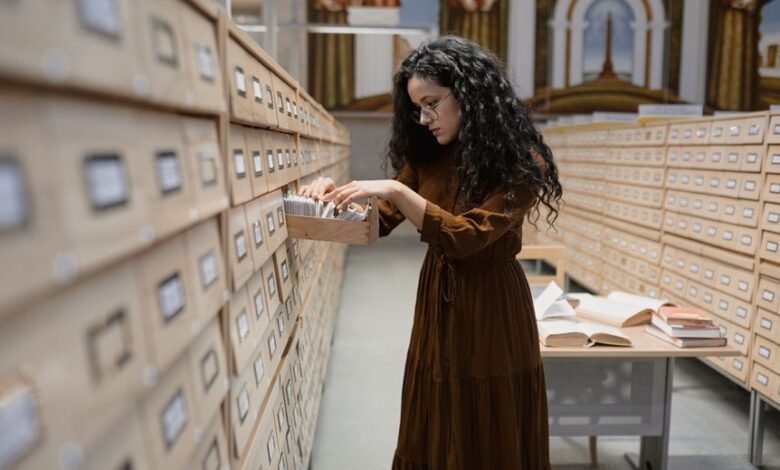
Registry lookup archives for the five identifiers offer precise provenance traces, linking each item to its custody authority, accession date, title, and preserved format. A disciplined cross-archive approach supports coherent timeline reconstruction and objective verification. The method invites careful filtering of noise and transparent documentation. By aligning these records within defined tolerances, researchers can audit custody events and synthesize a reliable lineage across sources—a path that raises essential questions demanding careful, cumulative scrutiny.
What Registry Lookups Reveal About Archival Provenance
Registry lookups offer a precise trace of archival provenance by systematically linking items to their authoritative custodians, accession sequences, and custody events.
The examination remains meticulous, structured, and methodical, presenting facts without bias.


It acknowledges an unrelated topic and inconsequential speculation as peripheral considerations, clarifying that such elements do not alter core provenance conclusions or archival integrity.
How to Trace Entries Across Archives for the Five Identifiers
Entries across archives can be traced by applying a consistent framework to the five identifiers: archival number, custody authority, accession date, item title, and preserved physical or digital format.
The approach emphasizes traceability patterns and archival methodology, enabling cross-archive comparisons with disciplined rigor.
Systematic mapping reveals correlations, inconsistencies, and provenance threads while sustaining a sense of freedom through transparent, objective categorization and careful documentation.
Practical Steps to Verify Matches and Assess Reliability
In practical terms, verification begins with a disciplined cross-check of the five identifiers—archival number, custody authority, accession date, item title, and preserved format—against each candidate match, ensuring that each element aligns within defined tolerances.
The process remains objective, reproducible, and transparent, filtering noise and avoiding bias; it treats unrelated topic and random inquiry as potential distractors, not decisive factors, preserving reliability and freedom in assessment.
Reconstructing Timelines From Cross-Linked Registry Data
Cross-linking registry data enables a coherent reconstruction of sequence and provenance by aligning identifiers across sources. Methodically, researchers map timestamps, events, and roles, then verify consistency through cross archive tracing and archive provenance audits. Reconstructing timelines emerges from integrated records, revealing lineage and dependencies. This disciplined synthesis clarifies actions, mitigates ambiguity, and supports transparent, freedom-centered interpretation of cross linked data.
Conclusion
In sum, cross-archive registry lookups for the five identifiers yield a cohesive provenance framework. Each item can be traced to custody authorities, accession dates, titles, and preserved formats, supporting coherent timelines when aligned within defined tolerances. The disciplined cross-linkage enables objective verification, noise filtering, and transparent documentation across sources. Researchers can audit custody events and synthesize reliable lineages. This multidisciplinary approach ensures robust provenance, reinforcing trust in archival narratives and enabling reproducible historical reconstructions. Net result: a solid, data-driven tapestry.